The Best Way to Categorize Recipes (Pick One Axis)
The best way to categorize recipes is to pick one axis and let filters do the rest. A practical system for food bloggers with growing libraries.
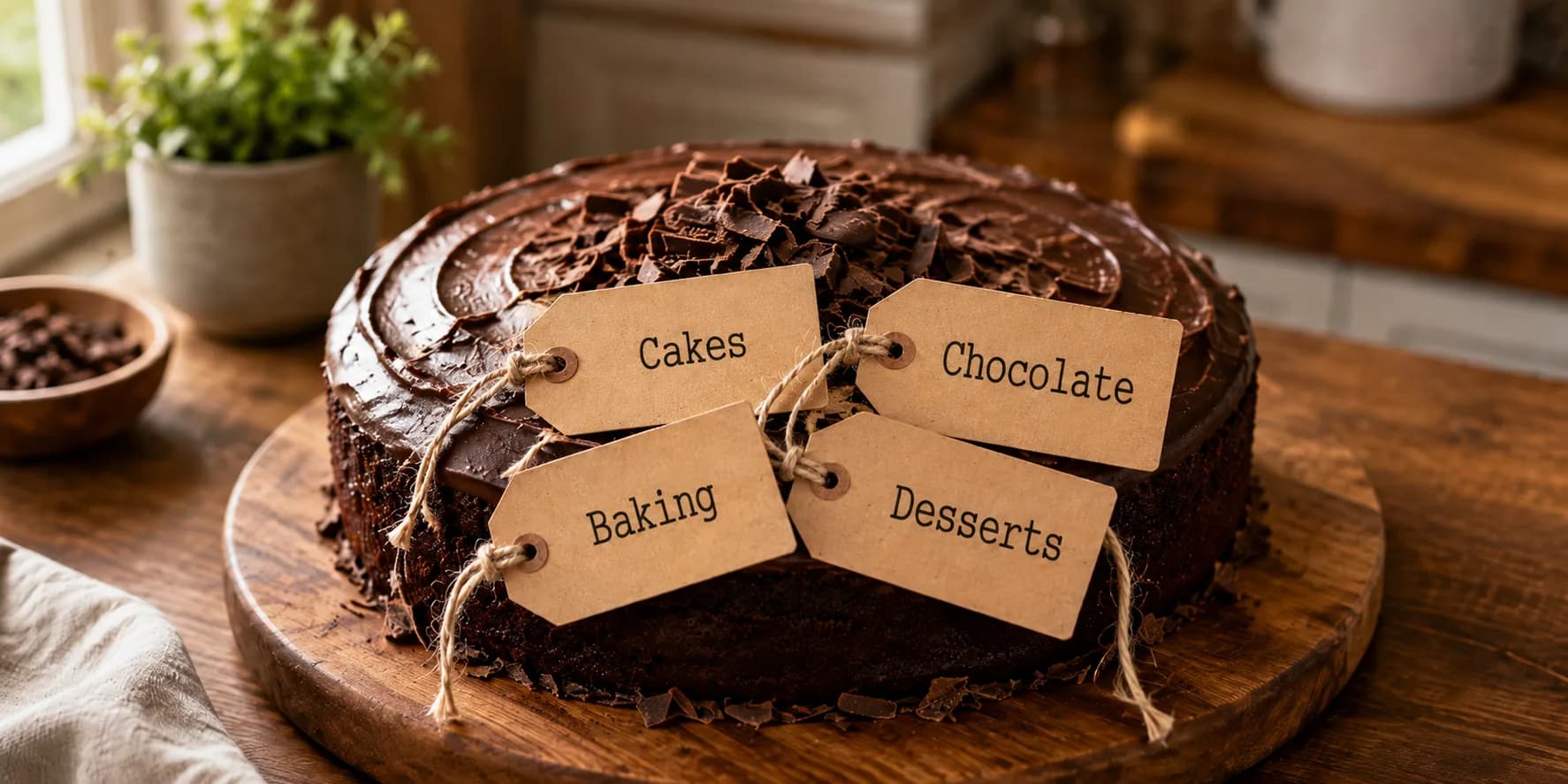
Your chocolate layer cake belongs in Desserts. It also belongs in Cakes, in Baking, and arguably in Chocolate. You picked one, published, and moved on — and now you can't remember which one you picked.
That's not a discipline problem. It's a structure problem, and it's why most recipe category systems quietly stop working somewhere around post fifty.
Why most recipe categories stop working
Open the category menu on almost any food blog and you'll see a list like this: Breakfast, Dinner, Italian, Vegan, Chicken, Air Fryer, Under 30 Minutes, Desserts.
That reads as one list. It's six different systems stacked into a single menu — meal type, cuisine, dietary, main ingredient, cooking method, and time, all competing for the same slot.
Each one is a legitimate way to sort recipes. Mixed together, they overlap constantly. Every recipe that qualifies for three of them turns into a small judgment call you have to make again at publish time, and you will not make it the same way twice.
Do that fifty times and the categories stop meaning anything. Desserts has forty recipes, Air Fryer has four, and most of your air fryer desserts are filed under Desserts only because that's what you happened to click that afternoon.
The six ways to categorize recipes
Before fixing anything, name the axes you're actually working with:
- Meal type — breakfast, lunch, dinner, snack. The safe default for general food blogs.
- Cuisine — Italian, Armenian, Thai. Strong for regional or heritage cooking blogs.
- Dietary — vegan, gluten-free, high-protein. Works when readers arrive with a constraint already in mind.
- Main ingredient — chicken, rice, eggplant. Matches the reader who opens the fridge first and decides second.
- Cooking method — baked, fried, air fryer, slow cooker. Natural for equipment-led or technique-led blogs.
- Time — under 30 minutes, weeknight, make-ahead. Fits weeknight-cooking audiences.
All six are valid. That's exactly the trap: because none of them is wrong, using all of them feels reasonable.
The decision rule is simpler than it looks. Which axis would a first-time reader click first? Not the one that describes your recipes most completely — the one a stranger would reach for before they know anything about you.
One axis is the category. Everything else is a filter.
Pick one axis. That's your category system. Every other axis becomes a filter.
The distinction that makes this work:
- Categories are mutually exclusive. A recipe gets exactly one.
- Filters overlap freely. A recipe gets as many as genuinely apply.
Back to the cake, on a blog whose spine is meal type:
- Category: Desserts
- Filters:
cakes,baking,chocolate,make-ahead
Nothing was lost. Every way of finding that cake still works — but there's now exactly one right answer to "where does this go," so you'll answer it the same way next time.
There's real disagreement on this. Grace + Vine Studios tells food bloggers to skip tags entirely (opens in a new tab), arguing that tags and categories do the same job and running both invites thin pages and duplicate content. Food Blogger Pro treats them as complementary layers (opens in a new tab).
Both are describing real outcomes from different setups. If your categories aren't mutually exclusive, then tags really are a second category system, and you've built two overlapping taxonomies that generate thin pages against each other. Once the category axis is single and exclusive, tags aren't competing with anything — they're the filter layer, and the failure mode disappears.
The rule that keeps it safe: filters narrow within a category. They never replace one.
Naming consistency is the part everyone skips
A system with clean logic still rots if the names drift.
If you use Dessert, never also create Desserts. To you they're the same shelf. To your site, your search, and your database, they're two shelves, and your recipes are now split across both for no reason.
Four rules that prevent almost all of it:
- Singular or plural — pick one and apply it everywhere. Dessert or Desserts. Not both, not "whichever sounds right for this one."
- No synonyms. Desserts, Sweets, and Baking are three names for roughly one thing. Pick one, retire the others.
- No abbreviations. "GF" and "Gluten-Free" will never merge on their own, and future-you won't remember which posts got which.
- One casing convention.
air fryer,Air Fryer, andAir-Fryerare three separate categories as far as any system is concerned.
Drift almost always comes from the same source: a freeform text field. If you retype the category name on every recipe, every typo becomes a permanent shelf. If you pick from a fixed list instead, drift is structurally impossible — you can't misspell an option you selected.
That's the strongest practical argument for a real tool over a spreadsheet column, and it's the same fragmentation problem that makes spreadsheets and notebooks fail food bloggers in the first place.
Your categories are SEO surface, not just navigation
Category pages are indexable pages. That cuts both ways.
Done well, they build topical relevance: consistent grouping tells Google what your site is actually about. Done badly, they generate a pile of near-empty pages competing with your own recipe posts.
Two numbers worth designing around. Food Blogger Pro recommends 5–10 core categories with at least 10–25 posts in each. Grace + Vine recommends writing 1–3 sentences of real description on every category page rather than leaving it bare.
The practical consequence: don't create a category you can't fill. A category holding two recipes is a thin page today and an abandoned one in six months. Leave it as a filter until it earns promotion — and it will tell you when, because you'll notice the filter getting used.
Run a category audit this week
Twenty minutes, whatever size your library is.
- List every category you currently use. All of them, including the ones you forgot existed.
- Label each one with its axis — meal type, cuisine, dietary, ingredient, method, or time.
- Pick your spine. One axis, chosen by what a first-time reader would click.
- Demote everything else to filters. Nothing gets deleted, it just stops being a category.
- Merge the duplicates. Dessert and Desserts collapse into one. So do Quick and Under 30 Minutes.
- Cut anything under three recipes. It was a filter pretending to be a category.
Most people finish with six to ten categories and a noticeably longer filter list. That's the shape you're aiming for.
If the audit turns up problems bigger than naming — recipes scattered across four tools, no single canonical version — categories aren't your bottleneck yet. Start with the five things any recipe organization system needs, then come back to this.
None of this strictly requires software. A spreadsheet with one Category column and one Filters column enforces the same rule, as long as you type the same words every single time.
Which is the part that fails. We built categories in rrecipe.ai around a fixed, selectable list rather than a free text field for exactly that reason — a category you pick can't drift into four spellings, and filtering across the rest doesn't require inventing a new bucket. Pick your one axis first, though. The tool only enforces the system; it won't choose it for you.
Related Posts
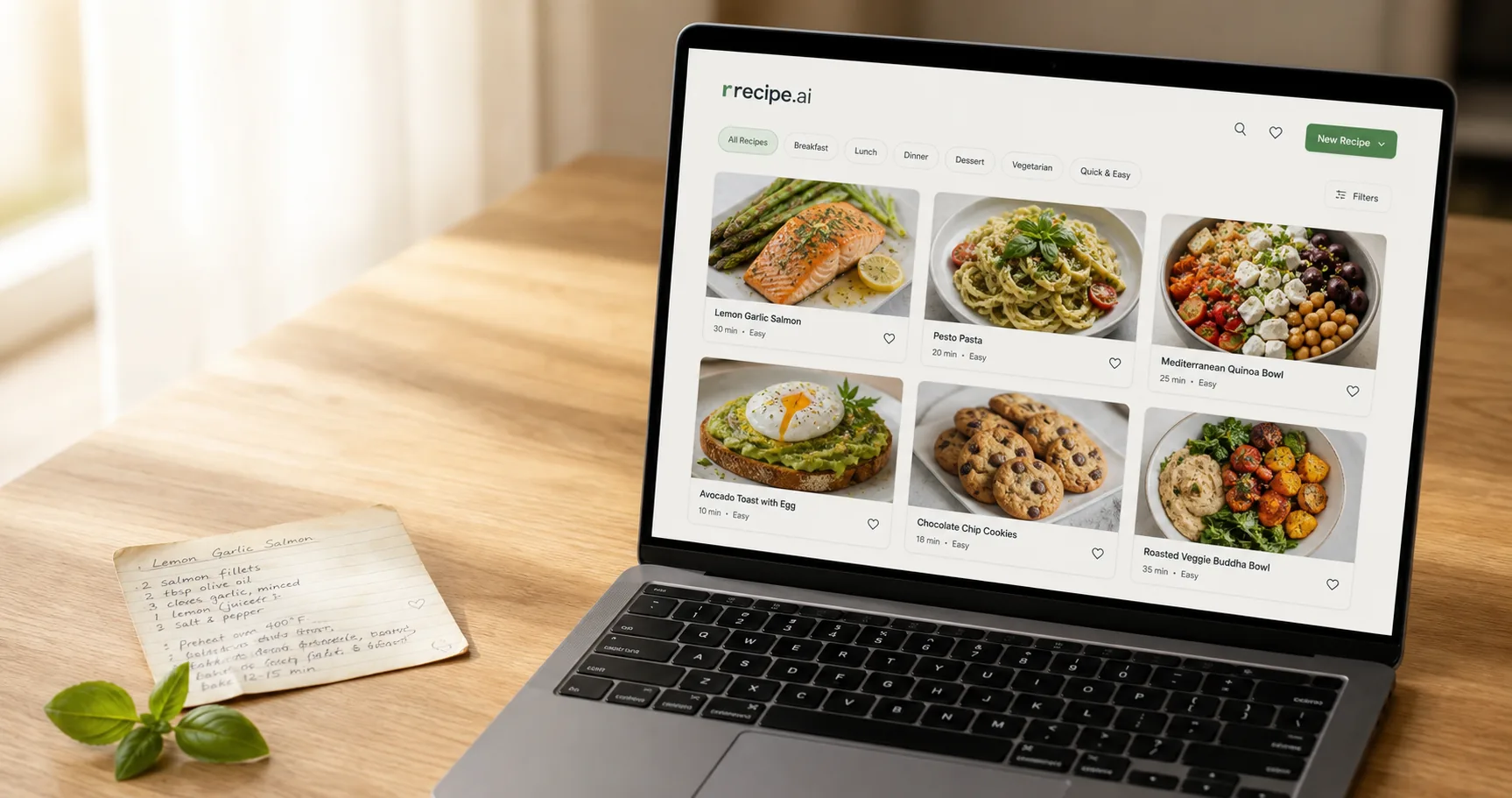
Looking for the best recipe organizer app? Here's what food creators actually need from one — and how rrecipe.ai turns messy drafts into a searchable library.
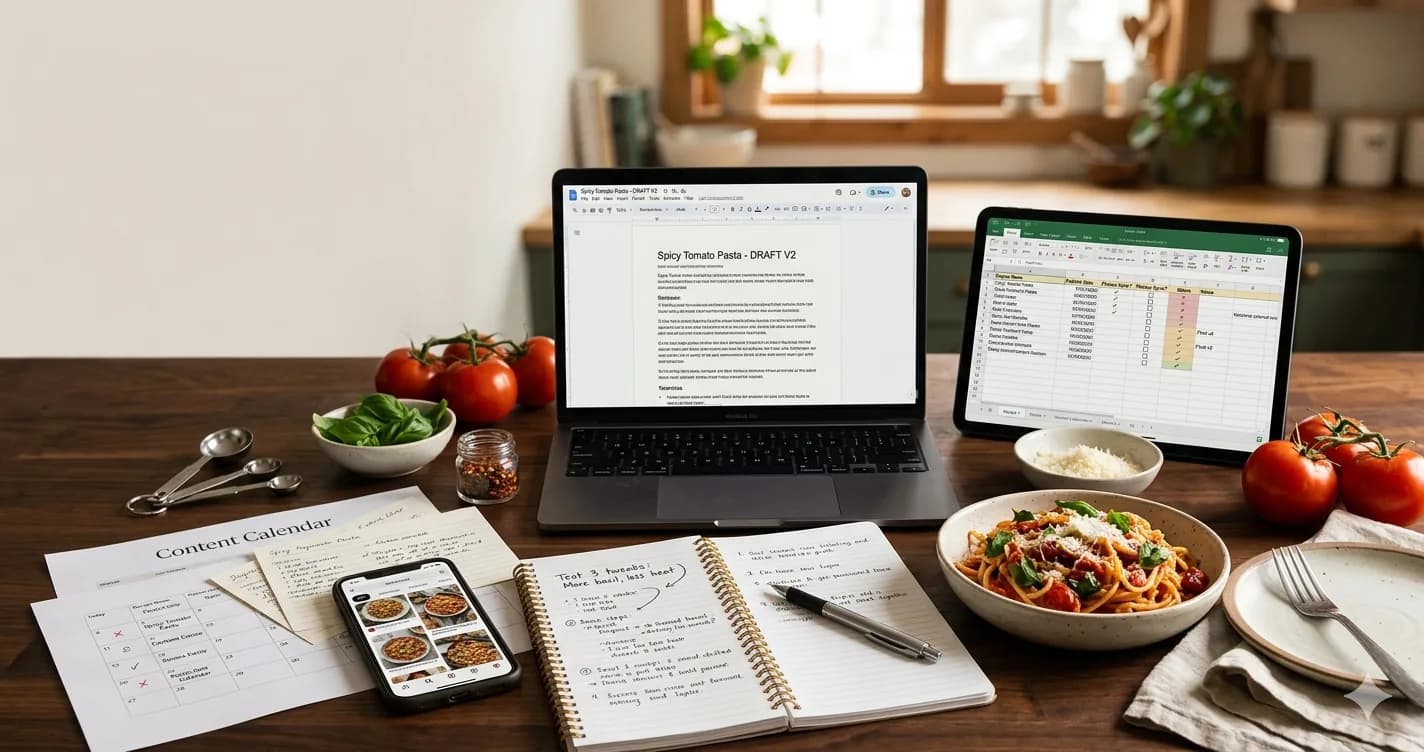
How to organize recipes properly — the five things any recipe organization system needs before you commit to a tool.